Today's
EarthStation1.com 15% Off Commemorative Memorial Title: Household
Saints 1993 Tracey Ullman Vincent D'Onofrio DVD MP4 USB
Today, November 13, 2025
November 13: World Kindness Day: -- An
international observance introduced in 1998 by the World Kindness
Movement, a coalition of nations' kindness NGOs. It is observed in
many countries, including Canada, Japan, Australia, Nigeria and
United Arab Emirates. In 2009, Singapore observed the day for the
first time. Italy and India also observed the day. In the UK, it
is fronted by David Jamilly, who co-founded Kindness Day UK with
Louise Burfitt-Dons. In 2010 at the request of Michael
Lloyd-White, the NSW Federation Parents and Citizens Association
wrote to the Minister of The NSW Department of Education to place
World Kindness Day on the NSW School Calendar. In 2012 At the
request of the Chairman of World Kindness Australia, World
Kindness Day was placed on the Federal School Calendar and the
then Minister of School Education, Early Childhood, and Youth. The
Hon Peter Garrett provided a Declaration of Support for World
Kindness Australia and placed World Kindness Day on the National
School Calendar for over 9000 schools. Schools across the globe
are now celebrating World Kindness Day and work with local NGOs
such as the Be Kind People Project and Life Vest Inside In the
USA. In 2012 in Australia, Marie Bashir, Governor of NSW, hosted
an event for the first time at Government House to celebrate World
Kindness Day and accepted a Cool To Be Kind Award from year 3 &
4 students. Australian Councils representing over 1.3 million
residents have also signed Declarations of Support for World
Kindness Australia placing World Kindness Day on the Council
Calendar of Events. Events include THE BIG HUG, handing out
Kindness Cards, Global Flashmob, which was coordinated by Orly
Wahba from USA which was held in 15 countries and 33 cities with
its images of the event making the big screens in New York City.
Canada celebrates with The Kindness Concert and in Singapore in
2009, 45,000 yellow flowers were given away. In 2017 World
Kindness day was also celebrated in Slovenia, organised by
volunteering organisation Humanitarcek as part of their project
Randomised Kindness. World Kindness Day is to highlight good deeds
in the community focusing on the positive power and the common
thread of kindness which binds us. Kindness is a fundamental part
of the human condition which bridges the divides of race religion,
politics, gender and zip codes. Kindness Cards are also an ongoing
activity which can either be passed on to recognize an act of
kindness and or ask that an act of kindness be done. Approaches
are being made to the United Nations by the peak global body, the
World Kindness Movement, to have World Kindness Day officially
recognized and its members unanimously sign a Declaration of
Support for World Kindness. According to Gulf News, "it is a
day that encourages individuals to overlook boundaries, race and
religion." On Sale @ 15% Off Discount Till Midnight PT!
https://store.earthstation1.com/household-saints-1993-tracey-ullman-vincent-d39onofrio-dvd-1993394.html
Today's
EarthStation1.com 15% Off Commemorative Memorial Title: Legacy Of
War: Amerasian Children Of The Vietnam War MP4 Download DVD
Today, November 13, 2025
November 13: World Orphans Day: -- An
important date for Americans to come together and show that they
care about the orphans in their community. Millions of young
children face problems because one or both of their parents are no
longer in this world. It is important for the community to make
arrangements for their education, health, shelter, food, and
social well-being. World Orphans Day is the perfect opportunity
for well-meaning and socially responsible Americans to show that
they stand with orphans in their time of need. The world's first
orphanage was established by the Romans in 400 A.D. The main
reason for opening an orphanage was to provide food, shelter, and
other health care needs to children who had lost their parents and
don't have any caregivers to look after them. The idea of looking
after orphaned children is not new. The Greek legal system made it
mandatory to provide financial support to orphans until they are
18. Churches in the Middle Ages also established shelters and
orphanages for children. During the 1900s, the living conditions
of orphans in England became worse. Many children even suffered
from malnutrition due to a lack of food and proper medical care in
care facilities. Soon, orphanages gained a bad reputation for not
giving the required care and attention to orphans. Because of
this, people in western countries were encouraged to legally adopt
orphaned children to provide them a better future and take care of
their health and education. In 2006, the Stars Foundation - an
entertainment organization that raises funds and raises
understanding of children orphaned or displaced by poverty, war,
AIDS, and natural disasters - observed the first World Orphans
Day. The main idea was to create awareness about the current
situation of orphans worldwide. People are encouraged to support
orphans by giving them the care, respect, and sense of security
they deserve. People all across the globe raise funds for orphaned
children to help them have access to quality health care and
education. On Sale @ 15% Off Discount Till Midnight PT!
https://store.earthstation1.com/legacy-of-war-amerasian-children-of-the-vietnam-war-mp4-download-dvd.html
Today's
EarthStation1.com 15% Off Commemorative Memorial Title:
Discovering Music: World Music Documentary Series DVD, MP4, USB
Drive
Today, November 13, 2025
November 13: National Hug A Musician Day:
--- A lot of work goes into being a musician, and not everyone's
aware of it. If you know a musician who spends hours a day
practicing and hours a night playing at bars, clubs, and concerts,
envelop them in a big ol' loving hug and let them know they're
appreciated. Musicians have been around for as long as there has
been music to play. However, the origin of music itself is
unknown, as it's been around longer than the ability to record
history. Prehistoric music includes all of the world's music that
has existed prior to any historical references. This includes
traditional music apart of Native American and African cultures.
However, it is more common to refer to prehistoric music as folk,
indigenous, or traditional music. Archaeologists continue to
speculate over whether the "Divje Babe Flute" is indeed
the oldest musical instrument. It's dated to be approximately
43,500 years old and is made out of a cave bear femur. The quarry
lies in whether or not this item was actually used as an
instrument or just gnawed on by carnivores. When people think of
worldly musicians who have made a huge impact in the way music has
formed, they're likely to think of people like Mozart and
Beethoven. Classical music was fashioned by musicians who lived
during the rising of the middle class. Many of the middle-class in
France lived under long-time absolute monarchies, so music was
performed in environments that were more constrained than they
were in eras like the Baroque and Renaissance. The popular
instrumental music was dominated by several well-defined forms:
the sonata, the symphony, and the concerto - though none of these
were defined or taught as they are now in music theory. The 20th
century brought major musical changes. Musicians strove to
represent the world the way they perceived it. Where past eras of
music concentrated on spirituality, this new modern period
emphasized the physicality and the concrete. The invention of
audio recording caused a boom in all genres of music, especially
pop, rock, folk, country, and all forms of classical. On Sale @
15% Off Discount Till Midnight PT!
https://store.earthstation1.com/the-discovering-music-tv-series-2-dual-layer-dvd-se2.html
Today's
EarthStation1.com 15% Off Commemorative Memorial Title: NBC
University Theater Of The Air Literature Radio Series MP3 DVD USB
Today, November 13, 2025
November 13, 1850: #BOTD: #HBD! Robert
Louis Stevenson, Scottish novelist, poet, travel writer and
essayist most noted for Treasure Island, Kidnapped, Strange Case
of Dr Jekyll and Mr Hyde, and A Child's Garden of Verses (d.
December 3, 1894) is #born Robert Lewis Balfour Stevenson in
Edinburgh, Scotland, where he was educated. He suffered from
serious bronchial trouble for much of his life, but continued to
write prolifically and travel widely in defiance of his poor
health. As a young man, he mixed in London literary circles,
receiving encouragement from Andrew Lang, Edmund Gosse, Leslie
Stephen and W. E. Henley, the last of whom may have provided the
model for Long John Silver in Treasure Island. In 1890, he settled
in Samoa where, alarmed at European and American encroachment upon
the South Sea islands, his writing turned away from romance and
adventure toward a darker realism. Robert Louis Stevenson died in
his island home in 1894 in the village of Vailima, Samoa at the
age of 44 of an apparent cerebral haemorrhage. Stevenson was
talking to his wife and straining to open a bottle of wine when he
suddenly exclaimed, "What's that?", asked his wife "does
my face look strange?", and collapsed. He died within a few
hours. The Samoans insisted on surrounding his body with a
watch-guard during the night and on bearing him on their shoulders
to nearby Mount Vaea, where they buried him on a spot overlooking
the sea on land donated by British Acting Vice Consul Thomas
Trood. Stevenson had always wanted his Requiem inscribed on his
tomb: ========= "Under the wide and starry sky, | Dig the
grave and let me lie. | Glad did I live and gladly die, | And I
laid me down with a will. | This be the verse you grave for me: |
Here he lies where he longed to be; | Home is the sailor, home
from sea, | And the hunter home from the hill." =========
Stevenson was loved by the Samoans, and his tombstone epigraph was
translated to a Samoan song of grief. A celebrity in his lifetime,
Stevenson's critical reputation has fluctuated since his death,
though today his works are held in general acclaim. In 2018 he was
ranked, just behind Charles Dickens, as the 26th-most-translated
author in the world.
https://store.earthstation1.com/nbc-university-theater-of-the-air-otr-mp3-dv3.html
Today's
EarthStation1.com 15% Off Commemorative Memorial Title: The
History Of Jazz A Video Retrospective DVD, MP4 Download, USB Drive
Today, November 13, 2025
November 13, 1894: #BOTD: #HBD! Bennie
Moten, African American jazz pianist and bandleader, founder of
the Kansas City Orchestra, the most important of the regional,
blues-based orchestras, known as territory bands, active in the
Midwest in the 1920s, who helped to develop the riffing style that
would come to define many of the 1930s Big Bands (d. April 2,
1935) is #born Benjamin Moten in Kansas City, Missouri, where he
is raised and founded the Kansas City Orchestra. Moten started
making music from an early age and developed as a pianist, pulling
together other musicians in a band. His first recordings were made
(for OKeh Records) on September 23, 1923, and were rather typical
interpretations of the New Orleans style of King Oliver and
others. They also showed the influence of the ragtime that was
still popular in the area, as well as the stomping beat for which
his band was famous. These OKeh sides (recorded 1923-1925) are
some of the more valuable acoustic jazz 78s of the era; they are
treasured records in many serious jazz collections. They signed
with Victor Records in 1926, and were influenced by the more
sophisticated style of Fletcher Henderson. More often than not,
their pieces featured a hard stomp beat that was extremely popular
in Kansas City. Moten continued to be one of Victor's most popular
orchestras through 1930. Their song "Kansas City Shuffle"
was recorded during this time. (The band recorded prolifically,
and many of their records were issued in Victor's regular series,
not specifically marketed to the Black community as some other
bands were.) By 1927, Moten's orchestra contained many names
associated with Kansas City music, and included Harlan Leonard
(alto sax), Jack Washington (alto and baritone sax), Ed Lewis and
Lamar Wright (trumpets) and Willie McWashington (drums). His
orchestra featured the standard Kansas City style at the time:
smooth sax chorus over tinkling piano and a bass drum beat.
Moten's popular 1928 recording of "South" on Victor
V-38021 (itself a remake of the first version on OKeh from late
1924) stayed in Victor's catalog over the years. (It was reissued
as 24893 in 1935, as Victor phased out any remaining V-38000
series that were still in the catalog.) In the late 1940s, it
became a big jukebox hit (by then, reissued as 44-0004). It
remained in print (as a vinyl 45) until RCA stopping making vinyl
records. By 1928 Moten's piano was showing some boogie woogie
influences, but the real revolution came in 1929, after he
recruited Count Basie, Walter Page, and Oran 'Hot Lips' Page.
Walter Page's walking bass lines gave the music an entirely new
feel compared to the 2/4 tuba of his predecessor Vernon Page,
colored by Basie's understated, syncopated piano fills. Another
boon to the band was adding Jimmy Rushing as their primary
vocalist. Their final session showed the early stages of what
became known as the "Basie sound," four years before
Basie recorded under his own name. (They made 10 recordings at
Victor's Camden, New Jersey, studios on December 13, 1932, during
a time when the band was suffering significant financial
hardship.) By this time Ben Webster and Rushing had joined Moten's
band, but Moten himself did not play on these sessions. These
sides were mostly arranged by Eddie Durham, and they include a
number of tunes that later became swing classics. Nathan W.
Pearson Jr. summarized Bennie Moten's influence on Kansas City's
jazz legacy: "Among Kansas City musicians... the city, the
style, and the era of its flowering are virtually synonymous with
the Bennie Moten Orchestra." Bennie Moten died at Kansas
City's Wheatley-Provident Hospital in Kansas City, Missouri at the
age of 40 following a failed tonsillectomy. He is buried at
Highland Cemetery in Kansas City. On Sale @ 15% Off Discount Till
Midnight PT!
https://store.earthstation1.com/the-history-of-jazz-by-billy-taylor-parts-i-amp-ii-dvd.html
Today's
EarthStation1.com 15% Off Commemorative Memorial Title: Carriers:
Aircraft Carrier History TV Series DVD, Download, USB Drive
Today, November 13, 2025
November 13, 1941: The European Civil
War: World War II: The Second European War (The European Theater
Of World War II): The Mediterranean And Middle East Theater Of
World War II (The Mediterranean Theater Of War) The Sinking Of The
HMS Ark Royal: -- The aircraft carrier HMS Ark Royal is torpedoed
by U-81, sinking the following day. On November 10, 1941, Ark
Royal had just ferried more aircraft to Malta before returning to
Gibraltar. Admiral Somerville had been warned of U-boats off the
Spanish coast, and reminded Force H, to which Ark Royal belonged,
to be vigilant. Also at sea was Friedrich Guggenberger's U-81,
which had received a report that Force H was returning to
Gibraltar. On November 13, at 15:40, the sonar operator aboard the
destroyer Legion detected an unidentified sound, but assumed it
was the propellers of a nearby destroyer. One minute later, Ark
Royal was struck amidships by a torpedo, between the fuel bunkers
and bomb store, and directly below the bridge island. The
explosion caused Ark Royal to shake, hurled loaded torpedo-bombers
into the air, and killed one of her 1,488 crew members, Able
Seaman Edward Mitchell. A 130-by-30-foot hole was created on the
ship's bottom and on the starboard side below the water-line by
the torpedo. HMS Ark Royal (pennant number 91) was designed in
1934 to fit the restrictions of the Washington Naval Treaty. The
Ark Royal was built by Cammell Laird at Birkenhead, England, and
completed in November 1938. Her design differed from previous
aircraft carriers. Ark Royal was the first ship on which the
hangars and flight deck were an integral part of the hull, instead
of an add-on or part of the superstructure. Designed to carry a
large number of aircraft, she had two hangar deck levels. She was
used during a period that first saw the extensive use of naval air
power; several carrier tactics were developed and refined aboard
Ark Royal. Ark Royal operated in some of the most active naval
theatres of the Second World War. She was involved in the first
aerial U-boat kills of the war, operations off Norway, the search
for the German battleship Bismarck (it was one of her Fairy
Swordfish torpedo bombers that critically wounded her), and the
Malta Convoys. Ark Royal survived several near misses and gained a
reputation as a 'lucky ship'. Her sinking was the subject of
several inquiries, with investigators keen to know how the carrier
was lost in spite of efforts to save the ship and tow her to the
naval base at Gibraltar. They found that several design flaws
contributed to the loss, which were rectified in new British
carriers. The wreck was discovered in December 2002 by an American
underwater survey company using sonar mounted on an autonomous
underwater vehicle, under contract from the BBC for the filming of
a documentary about the ship, at a depth of about 3,300 feet
(1,000 m) and approximately 30 nautical miles (56 km; 35 mi) from
Gibraltar. On Sale @ 15% Off Discount Till Midnight PT!
https://store.earthstation1.com/carriers-complete-14-part-tv-series-4-dvd-144.html
Today's
EarthStation1.com 15% Off Commemorative Memorial Title: World War
II With Walter Cronkite TV Series DVD, Download, USB Drive
Today, November 13, 2025
November 13, 1942: World War II: The
Pacific War (The Asia-Pacific War, The Asiatic-Pacific Theater,
The Pacific Theater Of World War II): The Pacific Ocean Theater Of
World War II: The South West Pacific Area (SWPA): Operation
Cartwheel: The Solomon Islands Campaign: The Battle Of Guadalcanal
(The Guadalcanal Campaign, Operation Watchtower): The Naval Battle
Of Guadalcanal (The Third And Fourth Battles Of Savo Island, The
Battle Of The Solomons, The Battle Of Friday the 13th, The Night
Of The Big Guns, The Third Battle Of The Solomon Sea): -- U.S. and
Japanese ships engage in an intense, close-quarters surface naval
engagement in which the five Sullivan Brothers from Waterloo,
Iowa, were lost in the sinking of the cruiser USS Juneau by a
Japanese torpedo; following their deaths, the U.S. Navy changed
regulations to prohibit close relatives from serving on the same
ship. The Naval Battle Of Guadalcanal was the decisive engagement
in a series of naval battles between Allied (primarily American)
and Imperial Japanese forces during the months-long Guadalcanal
Campaign in the Solomon Islands during World War II. The action
consisted of combined air and sea engagements over four days, most
near Guadalcanal and all related to a Japanese effort to reinforce
land forces on the island. The only two U.S. Navy admirals to be
killed in a surface engagement in the war were lost in this
battle. Allied forces landed on Guadalcanal on 7 August 1942 and
seized an airfield, later called Henderson Field, that was under
construction by the Japanese military. There were several
subsequent attempts by the Imperial Japanese Army and Navy, using
reinforcements delivered to Guadalcanal by ship, to recapture the
airfield, which ultimately failed. In early November 1942, the
Japanese organized a transport convoy to take 7,000 infantry
troops and their equipment to Guadalcanal to attempt once again to
retake the airfield. Several Japanese warship forces were assigned
to bombard Henderson Field with the goal of destroying Allied
aircraft that posed a threat to the convoy. Learning of the
Japanese reinforcement effort, U.S. forces launched aircraft and
warship attacks to defend Henderson Field and prevent the Japanese
ground troops from reaching Guadalcanal. In the resulting battle,
both sides lost numerous warships in two extremely destructive
surface engagements at night. Nevertheless, the U.S. succeeded in
turning back attempts by the Japanese to bombard Henderson Field
with battleships. Allied aircraft also sank most of the Japanese
troop transports and prevented the majority of the Japanese troops
and equipment from reaching Guadalcanal. Thus, the battle turned
back Japan's last major attempt to dislodge Allied forces from
Guadalcanal and nearby Tulagi, resulting in a strategic victory
for the U.S. and its allies and deciding the ultimate outcome of
the Guadalcanal campaign in their favor. On Sale @ 15% Off
Discount Till Midnight PT!
https://store.earthstation1.com/world-war-ii-with-walter-cronkite-dvd-set-all-8-discsht8.html
Today's
EarthStation1.com 15% Off Commemorative Memorial Title: De Gaulle
And France TV Series DVD, Video Download, USB Flash Drive
Today, November 13, 2025
November 13, 1945: France: The History Of
France: The Modern History Of France: Governments Of France: The
Aftermath Of World War II: The French Fourth Republic: -- The
successor to The Provisional Consultative Assembly of Free France
that operated during World War II, the French Constituent Assembly
Of 1945, whose main task was to provide a new constitution for the
new French Fourth Republic, unanimously elects Charles de Gaulle
president of the French provisional government, but problems
immediately arose when it came to selecting the cabinet, due to
his unwillingness once more to allow the Communists any important
ministries. The Communists, now the largest party and with their
charismatic leader Maurice Thorez back at the helm, were not
prepared to accept this for a second time, and a furious row
ensued, during which de Gaulle sent a letter of resignation to the
speaker of the Assembly and declared that he was unwilling to
trust a party that he considered to be an agent of a foreign power
(Russia) with authority over the police and armed forces of
France. Eventually, the new cabinet was finalised on November 21,
with the Communists receiving five out of the twenty-two
ministries, and although they still did not get any of the key
portfolios. De Gaulle believed that the draft constitution placed
too much power in the hands of parliament with its shifting party
alliances. One of his ministers said he was "a man equally
incapable of monopolizing power as of sharing it". De Gaulle
outlined a programme of further nationalisations and a new
economic plan which were passed, but a further row came when the
Communists demanded a 20 percent reduction in the military budget.
Refusing to "rule by compromise", de Gaulle once more
threatened to resign. There was a general feeling that he was
trying to blackmail the assembly into complete subservience by
threatening to withdraw his personal prestige which he insisted
was what alone kept the ruling coalition together.Although the MRP
managed to broker a compromise which saw the budget approved with
amendments, it was little more than a stop-gap measure. Barely two
months after forming the new government, de Gaulle abruptly
resigned on January 20, 1946. The move was called "a bold and
ultimately foolish political ploy", with de Gaulle hoping
that as a war hero, he would be soon brought back as a more
powerful executive by the French people. However, that did not
turn out to be the case. With the war finally over, the initial
period of crisis had passed. Although there were still shortages,
particularly of bread, France was now on the road to recovery, and
de Gaulle suddenly did not seem so indispensable. The Communist
publication Combat wrote, "There was no cataclysm, and the
empty plate didn't crack". On Sale @ 15% Off Discount Till
Midnight PT!
https://store.earthstation1.com/de-gaulle-and-france-3-part-tv-documentary-series-2-disc-dvd-s32.html
Today's
EarthStation1.com 15% Off Commemorative Memorial Title: Soldiers:
A History Of Men In Battle TV Series + Bonus Title DVD MP4
Today, November 13, 2025
November 13, 1947: Firearms: The History
Of Firearms: Assault Rifles: The History Of Assault Rifles: Rifles
Of The Aftermath Of World War II: The Cold War: Assault Rifles Of
The Soviet Union: The AK-47 (The Avtomat Kalashnikova
["Kalashnikov's Automatic (Rifle)], The Kalashnikov, AK): --
The Soviet Union completes development of the AK-47, one of the
first proper assault rifles. The AK-47, officially known as the
Avtomat Kalashnikova, is a gas-operated, 7.62x39mm assault rifle,
developed in the Soviet Union by Mikhail Kalashnikov. It is the
originating firearm of the Kalashnikov rifle (or "AK")
family. Design work on the AK-47 began in 1945 during the closing
months of World War II. In 1946, the AK-47 was presented for
official military trials, and in 1948, the fixed-stock version was
introduced into active service with selected units of the Soviet
Army. An early development of the design was the AKS (S-Skladnoy
or "folding"), which was equipped with an underfolding
metal shoulder stock. In early 1949, the AK-47 was officially
accepted by the Soviet Armed Forces and used by the majority of
the member states of the Warsaw Pact. Even after seven decades,
the model and its variants remain the most popular and widely used
assault rifles in the world because of its reliability under harsh
conditions, low production costs compared to contemporary Western
weapons, availability in virtually every geographic region, and
ease of use. The AK-47 has been manufactured in many countries and
has seen service with armed forces as well as irregular forces and
insurgencies worldwide, and was the basis for developing many
other types of individual, crew-served and specialised firearms.
As of 2004, "Of the estimated 500 million firearms worldwide,
approximately 100 million belong to the Kalashnikov family,
three-quarters of which are AK-47s". On Sale @ 15% Off
Discount Till Midnight PT!
https://store.earthstation1.com/soldiers-a-history-of-men-in-battle-4-dvds-all-13-sh413.html
Today's
EarthStation1.com 15% Off Commemorative Memorial Title: King: A
Filmed Record: Montgomery To Memphis DVD, Download, USB Drive
Today, November 13, 2025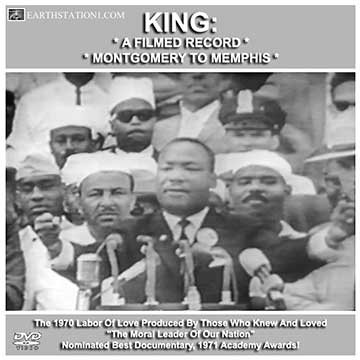
November 13, 1956: Civil Rights
Movements: The American Civil Rights Movement (1954-1968):
Anti-Black Racism In The United States: Segregation: Racial
Segregation: Civil Rights Protests: Civil Rights Protests In The
United States: Transport And Bus Segregation In The United States:
Transport And Bus Boycotts In The United States: The Montgomery
Bus Boycott: Browder v. Gayle, 352 U.S. 903: -- The U.S. Supreme
Court rules in the case of Browder v. Gayle that racial
segregation on public buses was unconstitutional, and declares
Alabama laws requiring segregated buses illegal. On December 17,
1956, the Supreme Court rejected city and state appeals to
reconsider their decision, and three days later the order for
integrated buses arrived in Montgomery. On December 20 1956 King
and the Montgomery Improvement Association voted to end the
381-day Montgomery bus boycott. In a statement that day, King
said: "The year-old protest against city buses is officially
called off, and the Negro citizens of Montgomery are urged to
return to the buses tomorrow morning on a non-segregated basis".
The Montgomery buses were integrated the following day. Aurelia S.
Browder v. William A. Gayle challenged the Alabama state statutes
and Montgomery, Alabama, city ordinances requiring segregation on
Montgomery buses. Filed by Fred Gray and Charles D. Langford on
behalf of four African American women who had been mistreated on
city buses, the case made its way to the U.S. Supreme Court, which
upheld a district court ruling that the statute was
unconstitutional. Gray and Langford filed the federal district
court petition that became Browder v. Gayle on 1 February 1956,
two days after segregationists bombed King's house. The original
plaintiffs in the case were Aurelia S. Browder, Susie McDonald,
Claudette Colvin, Mary Louise Smith, and Jeanatta Reese, but
outside pressure convinced Reese to withdraw from the case in
February. Gray made the decision not to include Rosa Parks in the
case to avoid the perception that they were seeking to circumvent
her prosecution on other charges. Gray "wanted the court to
have only one issue to decide-the constitutionality of the laws
requiring segregation on the buses" (Gray, 69). The list of
defendants included Mayor William A. Gayle, the city's chief of
police, representatives from Montgomery's Board of Commissioners,
Montgomery City Lines, Inc., two bus drivers, and representatives
of the Alabama Public Service Commission. Gray was aided in the
case by Thurgood Marshall and other National Association for the
Advancement of Colored People attorneys. Because Browder v. Gayle
challenged the constitutionality of a state statute, the case was
brought before a three-judge U.S. District Court panel. On 5 June
1956, the panel ruled two-to-one that segregation on Alabama's
intrastate buses was unconstitutional, citing Brown v. Board of
Education as precedent for the verdict. King applauded the victory
but called for a continuation of the Montgomery bus boycott until
the ruling was implemented. On 13 November 1956, while King was in
the courthouse being tried on the legality of the boycott's
carpools, a reporter notified him that the U.S. Supreme Court had
just affirmed the District Court's decision on Browder v. Gayle.
King addressed a mass meeting at Holt Street Baptist Church the
next evening, saying that the decision was "a reaffirmation
of the principle that separate facilities are inherently unequal,
and that the old Plessy Doctrine of separate but equal is no
longer valid, either sociologically or legally". On Sale @
15% Off Discount Till Midnight PT!
https://store.earthstation1.com/king-a-filmed-record--montgomery-to-memphis-dvd.html
Today's
EarthStation1.com 15% Off Commemorative Memorial Title: WABC Radio
Airchecks MP3 Collection 1960s-1980s DVD, MP3 Download, USB
Today, November 13, 2025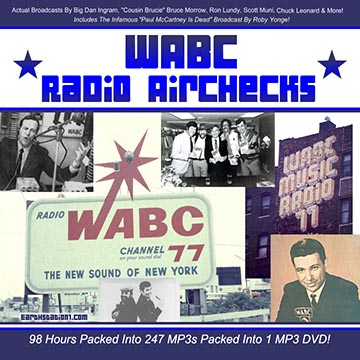
November 13, 1963: Aesthetics: The
Performing Arts: Music: Music History: Music Of The United States:
The History Of Rock And Roll (Rock & Roll, Rock-N-Roll, Rock
'N' Roll, Rock 'N Roll, Rock N' Roll): Record Releases: -- Surfin'
Bird, a song performed by American surf rock band the Trashmen
containing the repetitive lyric "the bird is the word",
is released by Garrett Records. The song is a combination of two R
& B hits by The Rivingtons: "Papa-Oom-Mow-Mow" and
"The Bird's The Word". The song reached Number 4 on the
Billboard Hot 100 and went on to become a cult classic, which has
been covered many times by many bands throughout the decades. The
Trashmen followed up on the success of the single by recording an
album named after the track, released two months later. The
Rivingtons had followed up their 1962 Billboard Hot 100 hit
"Papa-Oom-Mow-Mow" with the similar "The Bird's The
Word" in 1963. The Trashmen had not heard this version, but
saw a band named The Sorensen Brothers playing it and decided to
play the song that night at their own gig. During this first
performance, drummer and vocalist Steve Wahrer stopped playing and
ad-libbed the "Surfin' Bird" middle section. Despite the
Trashmen's not knowing "The Bird's The Word" was a
Rivingtons song, the similarity to "Papa-Oom-Mow-Mow"
was obvious, and the band added the chorus to the end of their new
track. A local disc jockey, Bill Diehl, was at the gig and
convinced the band to record the track. It was recorded at Kay
Bank Studios in Minneapolis. Diehl entered it into a local battle
of the bands competition, and it won. It was then sent to a battle
of the bands competition in Chicago, which it also won. This led
to the group being signed to Garrett Records, with the single
being quickly released. It reportedly sold 30,000 copies in its
first weekend before going on to national success, reaching No. 4
on the Billboard Hot 100. Wahrer was originally credited as the
song's writer, but that was changed to The Rivingtons (Al Frazier,
Carl White, Sonny Harris, and Turner Wilson Jr.) after the group
threatened to sue the Trashmen for plagiarism. On Sale @ 15% Off
Discount Till Midnight PT!
https://store.earthstation1.com/wabc-musicradio-shows-mp3-dvd-60s80s-am-360807775.html
Today's
EarthStation1.com 15% Off Commemorative Memorial Title: LBJ 1991
TV Documentary Series Lyndon Johnson DVD Download USB Drive
Today, November 13, 2025
November 13, 1969: The Aftermath Of World
War II: The Cold War: The Cold War In Asia: The Indochina Wars:
The Vietnam War (The Second Indochina War, The Vietnam Conflict,
The Resistance War Against America): The United States In The
Vietnam War: Opposition To United States Involvement In The
Vietnam War: The Moratorium To End The War In Vietnam: The March
Against Death (The Moratorium March): -- Beginning on a Thursday
night, the largest antiwar rally in U.S. History, between 250,000
and 500,000 anti-war protesters, peacefully demonstrate with
symbolic March Against Death in Washington, D.C.. The Moratorium
To End The War In Vietnam was a massive demonstration and teach-in
across the United States against the United States involvement in
the Vietnam War. It took place on October 15, 1969, followed a
month later, on November 15, 1969, by a large Moratorium March in
Washington, D.C.. It marks the moment that the anti-war movement
became a full-fledged mass movement. By the time that weekend was
over, Washington, D.C., had seen more protesters than any single
event in its history had drawn; attendance was higher, by tens of
thousands, than at the 1963 Civil Rights March On Washington. And
despite a name that, 45 years later, may seem overblown or vague,
the march was actually about something very specific. The deaths
they were protesting were those of soldiers and civilians in
Vietnam. As TIME reported in the Nov. 21, 1969, issue:
"Disciplined in organization, friendly in mood, [the march]
started at Arlington National Cemetery, went past the front of the
White House and on to the west side of the Capitol. Walking single
file and grouped by states, the protesters carried devotional
candles and 24-in. by 8-in. cardboard signs, each bearing the name
of a man killed in action or a Vietnamese village destroyed by the
war. The candles flickering in the wind, the funereal rolling of
drums, the hush over most of the line of march-but above all, the
endless recitation of names of dead servicemen and gutted villages
as each marcher passed the White House -were impressive drama:
"Jay Dee Richter"... "Milford Togazzini"...
"Vinh Linh, North Viet Nam"... "Joseph Y. Ramirez."
At the Capitol, each sign was solemnly deposited in one of several
coffins, later conveyed back up Pennsylvania Avenue in the
Saturday march." Mrs. Judy Droz, 23, of Columbia, Mo., was
chosen to walk first in the March Against Death. Her husband, a
Navy officer, died in Viet Nam last spring. "I have come to
Washington to cry out for liberty, for freedom, for peace,"
she said. The New Mobe [New Mobilization Committee to End the War
in Viet Nam] organizers had recruited others who had lost loved
ones in the war, but some gold-star families wanted none of it. In
Philadelphia and Dallas, groups of mothers and widows of G.I.s
killed in combat obtained court orders to bar use of the men's
names by the protesters. Another march took place that Saturday,
capped by speeches and musical performances watched by at least
250,000 people. A connected event in San Francisco also drew
record crowds for that city. On Sale @ 15% Off Discount Till
Midnight PT!
https://store.earthstation1.com/lbj-1991-tv-documentary-series-lyndon-johnson-dvd-download-usb-d1991.html
Today's
EarthStation1.com 15% Off Commemorative Memorial Title: The
Vietnam War With Walter Cronkite DVD, Video Download, USB Drive
Today, November 13, 2025
November 13, 1982: The Aftermath Of World
War II: The Cold War: The Cold War In Asia: The Indochina Wars:
The Vietnam War (The Second Indochina War, The Vietnam Conflict,
The Resistance War Against America): The United States In The
Vietnam War: National Memorials: National Memorials Of the United
States: National Memorial Of the United States Dedications: The
Vietnam Veterans Memorial -- The Vietnam Veterans Memorial is
dedicated in Washington, D.C. after a march to its site by
thousands of Vietnam War veterans. The Vietnam Veterans Memorial
is a 2 acre U.S. national memorial in Washington, D.C. It honors
service members of the U.S. armed forces who fought in the Vietnam
War, service members who died in service in Vietnam/South East
Asia, and those service members who were unaccounted for (missing
in action, MIA) during the war. The Vietnam Veterans Memorial is a
2-acre (8,000 m2) U.S. national memorial in Washington, D.C. It
honors service members of the U.S. armed forces who fought in the
Vietnam War, service members who died in service in Vietnam/South
East Asia, and those service members who were unaccounted for
during the war. Its construction and related issues have been the
source of controversies, some of which have resulted in additions
to the memorial complex. This is reflected in the fact that the
Vietnam memorial is now made up of three parts: the Vietnam
Veterans Memorial Wall, completed first and the best-known part of
the memorial; The Three Soldiers; and the Vietnam Women's
Memorial. The main part of the memorial, the wall of names, which
was completed in 1982, is in Constitution Gardens adjacent to the
National Mall, just northeast of the Lincoln Memorial. The
memorial is maintained by the National Park Service, and receives
around 3 million visitors each year. The Memorial Wall was
designed by American architect Maya Lin. In 2007, it was ranked
tenth on the "List of America's Favorite Architecture"
by the American Institute of Architects. As a National Memorial,
it is listed on the National Register of Historic Places. On Sale
@ 15% Off Discount Till Midnight PT!
https://store.earthstation1.com/the-vietnam-war-with-walter-cronkite-tv-series-3-dvd-se3.html
Today's
EarthStation1.com #OnThisDay Commemorative Memorial Title: The
History Of Jazz A Video Retrospective DVD, MP4 Download, USB Drive
Today, November 13, 2025
November 13, 1995: Sonny Rollins Day: --
New York City Hall proclaimed November 13, 1995, to be "Sonny
Rollins Day." Several days later, Rollins gave a performance
at New York City's Beacon Theatre that reunited him with musicians
with whom he played as a teenager, including Jackie McLean, Walter
Bishop Jr., Percy Heath, Connie Henry, and Gil Coggins. Sonny
Rollins, African American jazz tenor saxophonist and composer who
is widely recognized as one of the most important and influential
jazz and hard bop musicians, was Walter Theodore Rollins born in
New York City to parents from the United States Virgin Islands.
Sonny Rollins in a seven-decade career has recorded over sixty
albums as a leader. A number of his compositions, including "St.
Thomas", "Oleo", "Doxy", "Pent-Up
House", and "Airegin", have become jazz standards.
Rollins has been called "the greatest living improviser".
The youngest of three siblings, he grew up in central Harlem and
on Sugar Hill, receiving his first alto saxophone at the age of
seven or eight. He attended Edward W. Stitt Junior High School and
graduated from Benjamin Franklin High School in East Harlem.
Rollins started as a pianist, changed to alto saxophone, and
finally switched to tenor in 1946. During his high school years,
he played in a band with other future jazz legends Jackie McLean,
Kenny Drew, and Art Taylor. After graduating from high school in
1947, Rollins began performing professionally; he made his first
recordings in early 1949 as a sideman with the bebop singer Babs
Gonzales (J. J. Johnson was the arranger of the group). Within the
next few months, he began to make a name for himself, recording
with Johnson and appearing under the leadership of pianist Bud
Powell, alongside trumpeter Fats Navarro and drummer Roy Haynes,
on a seminal "hard bop" session. In early 1950, Rollins
was arrested for armed robbery and spent ten months in Rikers
Island jail before being released on parole; in 1952, he was
re-arrested for violating the terms of his parole by using heroin.
Between 1951 and 1953, he recorded with Miles Davis, the Modern
Jazz Quartet, Charlie Parker, and Thelonious Monk. A breakthrough
arrived in 1954 when he recorded his famous compositions "Oleo",
"Airegin", and "Doxy" with a quintet led by
Davis that also featured pianist Horace Silver. In 1955, Rollins
entered the Federal Medical Center, Lexington, at the time the
only assistance in the U.S. for drug addicts. While there, he
volunteered for then-experimental methadone therapy and was able
to break his heroin habit, after which he lived for a time in
Chicago, briefly rooming with the trumpeter Booker Little. Rollins
initially feared sobriety would impair his musicianship, but then
went on to greater success. Rollins briefly joined the Miles Davis
Quintet in the summer of 1955. Later that year, he joined the
Clifford Brown-Max Roach quintet; studio albums documenting his
time in the band are Clifford Brown and Max Roach at Basin Street
and Sonny Rollins Plus 4. After the deaths of Brown and the band's
pianist, Richie Powell, in a June 1956 automobile accident,
Rollins continued playing with Roach and began releasing albums
under his own name on Prestige Records, Blue Note, Riverside, and
the Los Angeles label Contemporary. His widely acclaimed album
Saxophone Colossus was recorded on June 22, 1956, at Rudy Van
Gelder's studio in Hackensack, New Jersey, with Tommy Flanagan on
piano, former Jazz Messengers bassist Doug Watkins, and his
favorite drummer, Roach. This was Rollins's sixth recording as a
leader and it included his best-known composition "St.
Thomas", a Caribbean calypso based on a tune sung to him by
his mother in his childhood, as well as the fast bebop number
"Strode Rode", and "Moritat" (the Kurt Weill
composition also known as "Mack the Knife"). A long
blues solo on Saxophone Colossus, "Blue 7", was analyzed
in depth by the composer and critic Gunther Schuller in a 1958
article. In 1957, Rollins pioneered the use of bass and drums,
without piano, as accompaniment for his saxophone solos, a texture
that came to be known as "strolling." By 1959, Rollins
had become frustrated with what he perceived as his own musical
limitations and took the first - and most famous - of his musical
sabbaticals. While living on the Lower East Side of Manhattan, he
ventured to the pedestrian walkway of the Williamsburg Bridge to
practice, in order to avoid disturbing a neighboring expectant
mother. Today, a fifteen-story apartment building named "The
Rollins" stands on the Grand Street site where he lived.
Almost every day from the summer of 1959 through the end of 1961,
Rollins practiced on the bridge, next to the subway tracks. In the
summer of 1961, the journalist Ralph Berton happened to pass by
the saxophonist on the bridge one day and published an article in
Metronome magazine about the occurrence. During this period,
Rollins became a dedicated practitioner of yoga. Rollins ended his
sabbatical in 1962. He later said "I could have probably
spent the rest of my life just going up on the bridge. I realized,
no, I have to get back into the real world." In 2016, a
campaign was initiated that seeks to have the bridge renamed in
Rollins's honor. In November 1961, Rollins returned to the jazz
scene with a residency at the Jazz Gallery in Greenwich Village;
in March, 1962, he appeared on Ralph Gleason's television series
Jazz Casual. During the 1960s, he lived in Brooklyn, New York. In
1963, he made the first of many tours of Japan. In 1968, he was
the subject of a television documentary, directed by Dick
Fontaine, entitled Who is Sonny Rollins? In 1969, Rollins took
another two-year sabbatical from public performance. During this
hiatus period, he visited Jamaica for the first time and spent
several months studying yoga, meditation, and Eastern philosophies
at an ashram in Powai, India, a district of Mumbai. He returned
from his second sabbatical with a performance in Kongsberg,
Norway, in 1971. During the 1970s and 1980s, he also became drawn
to R and B, pop, and funk rhythms. Some of his bands during this
period featured electric guitar, electric bass, and usually more
pop- or funk-oriented drummers. It was also during this period
that Rollins' passion for unaccompanied saxophone solos came to
the forefront. In 1979 he played unaccompanied on The Tonight Show
and in 1985 he released The Solo Album, recorded live at the
Museum of Modern Art in New York. He also frequently played long,
extemporaneous unaccompanied cadenzas during performances with his
band; a prime example is his introduction to the tune "Autumn
Nocturne" on the 1978 album Don't Stop the Carnival. By the
1980s, Rollins had stopped playing small nightclubs and was
appearing mainly in concert halls or outdoor arenas; through the
late 1990s he occasionally performed at large New York rock clubs
such as Tramps and The Bottom Line. He added (uncredited) sax
improvisations to three tracks by the Rolling Stones for their
1981 album Tattoo You, including the single, "Waiting on a
Friend" and the long jam Slave (The Rolling Stones song). In
1995, New York City Hall proclaimed November 13, 1995, to be
"Sonny Rollins Day." In 1997, he was voted "Jazz
Artist of the Year" in the Down Beat magazine critics' poll.
The following year, Rollins, a dedicated advocate of
environmentalism, released an album entitled Global Warming.
Rollins won a 2001 Grammy Award for Best Jazz Instrumental Album
for This Is What I Do (2000). On September 11, 2001, the
71-year-old Rollins, who lived several blocks away, heard the
World Trade Center collapse, and was forced to evacuate his
apartment, with only his saxophone in hand. Although he was
shaken, he traveled to Boston five days later to play a concert at
the Berklee School of Music. The live recording of that
performance was released on CD in 2005 as Without a Song: The 9/11
Concert, which won the 2006 Grammy for Jazz Instrumental Solo for
Rollins' performance of "Why Was I Born?" Rollins was
presented with a Grammy Award for lifetime achievement in 2004;
that year also saw the death of his wife, Lucille. In 2006,
Rollins went on to complete a Down Beat Readers Poll triple win
for: "Jazzman of the Year", "#1 Tenor Sax Player",
and "Recording of the Year" for the CD Without a Song:
The 9/11 Concert. During these years, Rollins regularly toured
worldwide, playing major venues throughout Europe, South America,
the Far East, and Australasia; he is estimated to have sometimes
earned as much as $100,000 per performance. On September 18, 2007,
he performed at Carnegie Hall in commemoration of the fiftieth
anniversary of his first performance there. In 2010 Rollins was
awarded the National Medal of Arts and the Edward MacDowell Medal.
The following year he was the subject of another documentary by
Dick Fontaine, entitled Beyond the Notes. Rollins has not
performed in public since 2012, due to recurring respiratory
issues. In 2013, Rollins moved to Woodstock, New York. That
spring, he made a guest television appearance on The Simpsons and
received an honorary Doctor of Music degree from the Juilliard
School in New York City. In 2014 he was the subject of a Dutch
television documentary entitled Sonny Rollins-Morgen Speel ik
Beter and in October 2015, he received the Jazz Foundation of
America's lifetime achievement award. In the spring of 2017,
Rollins donated his personal archive to the Schomburg Center for
Research in Black Culture, a branch of the New York Public
Library. Later that year, he endowed the "Sonny Rollins Jazz
Ensemble Fund" at Oberlin College, in "recognition of
the institution's long legacy of access and social justice
advocacy."
https://store.earthstation1.com/the-history-of-jazz-by-billy-taylor-parts-i-amp-ii-dvd.html
Today's
EarthStation1.com #OnThisDay Commemorative Memorial Title:
Cambodia: The Khmer Rouge And The Cambodian Genocide DVD MP4 USB
Drive
Today, November 13, 2025
November 13, 1913: #BOTD: Lon Nol,
Cambodian general and politician, 37th Prime Minister of Cambodia
twice (1966-67; 1969-71) serving repeatedly as defence minister
and provincial governor, nationalist and conservative who led the
military coup of 1970 against Prince Norodom Sihanouk, abolished
the monarchy, and established the short-lived Khmer Republic, of
whom Frank Snepp, the CIA's chief analyst of North Vietnamese
strategy during The Vietnam War, said the only thing American
intelligence knew about Lon Nol was that "Lon Nol spelled
backwards is Lon Nol" (d. November 17, 1985) is #born in Prey
Veng Province, Cambodia to a family of mixed Khmer-Chinese
descent. On October 9, 1970, The Khmer Republic was proclaimed, a
semi-presidential republic but de facto military dictatorship, a
right-wing pro-United States military-led republican government of
Cambodia headed by General Lon Nol and Prince Sisowath Sirik
Matak, who had taken defacto power over Cambodia in the March 18,
1970 coup against Prince Norodom Sihanouk, then the country's head
of state. On the same day The Khmer Republic was proclaimed, tThe
Khmer National Armed Forces (FARK) was founded, with Lon Nol as
Commander-In-Chief during the Cambodian Civil War. Six months
later, on April 1, 1975, 16 days before the Khmer Rouge captured
Phnom Penh, Lon Nol fled to the United States, first to Hawaii and
then to Fullerton, California, where he remained until his death
in 1985. The Khmer Rouge then took Phnom Penh, briefly restored
the Kingdom of Cambodia, and began the Cambodian Genocide, killing
approximately 1.5 to 3 million Cambodian people from 1975 to 1979.
They renamed the government Democratic Kampuchea in January 1976.
Lon Nol lived with his second wife Sovanna Lon and several of his
nine children until his heart condition-related death at St. Jude
Medical Center in Fullerton, aged 72. He is buried at Loma Vista
Memorial Park cemetery in Fullerton.
https://store.earthstation1.com/cambodia-the-khmer-rouge-and-the-cambodian-genocide-dvd-mp4-usb-driv4.html
Today's
EarthStation1.com #OnThisDay Commemorative Memorial Title: Triumph
Of The West 13 Part TV Documentary Series DVD, Download, USB
Today, November 13, 2025
November 13, 1460: #DOTD: Prince Henry
The Navigator, Portuguese patron of exploration, central figure in
the early days of the Portuguese Empire and in the 15th-century
European maritime discoveries and maritime expansion, Grand Master
of the Military Order Of Christ, the Portuguese successor to the
Knights Templar, which had its headquarters at Tomar in central
Portugal (b. March 4, 1394) #dies of natural causes in Sagres,
Portugal aged 66. He is buried at Batalha Monastery in Batalha,
District Of Leiria, Centro Portugal. Dom Henrique of Portugal,
Duke of Viseu, better known as Prince Henry the Navigator
(Portuguese: Infante Dom Henrique, o Navegador), was born Henrique
Aviz into the House of Aviz (Portuguese: Casa de Avis), also known
as the Joanine Dynasty. Through his administrative direction, he
is regarded as the main initiator of what would be known as the
Age of Discoveries. Henry was the third child of the Portuguese
King John I and responsible for the early development of
Portuguese exploration and maritime trade with other continents
through the systematic exploration of Western Africa, the islands
of the Atlantic Ocean, and the search for new routes. King John I
founded the House of Aviz. Henry encouraged his father to conquer
Ceuta (1415), the Muslim port on the North African coast across
the Straits of Gibraltar from the Iberian Peninsula. He learned of
the opportunities offered by the Saharan trade routes that
terminated there, and became fascinated with Africa in general; he
was most intrigued by the Christian legend of Prester John and the
expansion of Portuguese trade. Henry is regarded as the patron of
Portuguese exploration.
https://store.earthstation1.com/triumph-of-the-west-tv-series-5-dual-layer-dvds-all-13-sh513.html
Today's
EarthStation1.com #OnThisDay Commemorative Memorial Title: A 78
RPM Christmas Song MP3 MegaSet CD, Audio Download, USB Stick
Today, November 13, 2025
November 13, 1996: #DOTD: #RIP: Bill Doggett, African American jazz, rhythm and blues and honky tonk pianist, organist, arranger and composer (b. February 16, 1916) #dies of a heart attack in New York City at the age of 80. He is buried at Mount Lawn Cemetery in Sharon Hill, Pennsylvania. Born William Ballard Doggett in Philadelphia, Pennsylvania, he is best known for his compositions "Honky Tonk" and "Hippy Dippy", and variously working with the Ink Spots, Johnny Otis, Wynonie Harris, Ella Fitzgerald, and Louis Jordan. During the 1930s and early 1940s he worked for Lucky Millinder, Frank Fairfax and arranger Jimmy Mundy. In 1942 he was hired as the Ink Spots' pianist and arranger. In 1951, Doggett organized his own trio and began recording for King Records. His best known recording is "Honky Tonk", a rhythm and blues hit of 1956, which sold four million copies (reaching No. 1 R & B and No. 2 Pop), and which he co-wrote with guitarist Billy Butler. The track topped the US Billboard R & B chart for over two months. He also arranged for many bandleaders and performers, including Louis Armstrong, Count Basie, Ella Fitzgerald, and Lionel Hampton. He continued to play and arrange until his death. https://store.earthstation1.com/a-78-rpm-christmas-mp3783.html
Today's
EarthStation1.com #OnThisDay Commemorative Memorial Title: John
Hammond: Bessie Smith to Bruce Springsteen DVD, MP4, Flash Drive
Today, November 13, 2025
November 13, 1942: #BOTD: #HBD! John P.
Hammond, American singer songwriter and guitarist of the blues,
rock music, and barrelhouse musical genres, is #born John Paul
Hammond in New York City, New York. Sometimes referred to as John
Hammond Jr., he is the son of record producer and talent scout
John H. Hammond and his first wife, actress Jemison McBride. He is
a descendant of Cornelius Vanderbilt, the patriarch of the
prominent Vanderbilt family, through his paternal grandmother
Emily Vanderbilt Sloane Hammond.
https://store.earthstation1.com/john-hammond-from-bessie-smith-to-bruce-springsteen-dvd.html
Today's
EarthStation1.com #OnThisDay Commemorative Memorial Title: The
Great Depression 7 Part Documentary Series MP4 Video Download DVD
Today, November 13, 2025
November 13, 1856: #BOTD: Louis Brandeis, American lawyer who served as an associate justice on the Supreme Court of the United States from 1916 to 1939, the first Jew appointed to the United States Supreme Court (d. October 5, 1941) is #born Louis Dembitz Brandeis in Louisville, Kentucky, the youngest of four children of immigrant parents from Bohemia (now in the Czech Republic), who raised him in a Secular Jewish home. Starting in 1890, he helped develop the "right to privacy" concept by writing a Harvard Law Review article of that title, and was thereby credited by legal scholar Roscoe Pound as having accomplished "nothing less than adding a chapter to our law." He was a leading figure in the antitrust movement at the turn of the century, particularly in his resistance to the monopolization of the New England railroad and advice to Woodrow Wilson as a candidate. In his books, articles and speeches, including Other People's Money and How the Bankers Use It, and The Curse of Bigness, he criticized the power of large banks, money trusts, powerful corporations, monopolies, public corruption, and mass consumerism, all of which he felt were detrimental to American values and culture. He later became active in the Zionist movement, seeing it as a solution to antisemitism in Europe and Russia, while at the same time being a way to "revive the Jewish spirit." When his family's finances became secure, he began devoting most of his time to public causes and was later dubbed the "People's Lawyer." He insisted on taking cases without pay so that he would be free to address the wider issues involved. The Economist magazine called him "A Robin Hood of the law." Among his notable early cases were actions fighting railroad monopolies, defending workplace and labor laws, helping create the Federal Reserve System, and presenting ideas for the new Federal Trade Commission. He achieved recognition by submitting a case brief, later called the "Brandeis Brief", which relied on expert testimony from people in other professions to support his case, thereby setting a new precedent in evidence presentation. Brandeis was a Republican before 1912, after then, he switch to being a Democrat. In 1916, President Woodrow Wilson nominated Brandeis to a seat on the Supreme Court of the United States. His nomination was bitterly contested, partly because, as Justice William O. Douglas later wrote, "Brandeis was a militant crusader for social justice whoever his opponent might be. He was dangerous not only because of his brilliance, his arithmetic, his courage. He was dangerous because he was incorruptible ... [and] the fears of the Establishment were greater because Brandeis was the first Jew to be named to the Court." On June 1, 1916, he was confirmed by the Senate by a vote of 47 to 22, to become one of the most famous and influential figures ever to serve on the high court. His opinions were, according to legal scholars, some of the "greatest defenses" of freedom of speech and the right to privacy ever written by a member of the Supreme Court. Some have criticized Brandeis for evading issues related to African Americans, as he did not author a single opinion on any cases about race during his twenty-three year tenure, and consistently voted with the court majority including in support of racial segregation. Brandeis retired from the Supreme Court on February 13, 1939, and died a year and a half later. Louis Brandeis died of undisclosed causes in Washington, D.C., aged 84. Both Brandeis and his wife are interred beneath the portico of The Brandeis School Of Law of The University Of Louisville, in Louisville, Kentucky. Brandeis himself made the arrangements that made the law school one of only thirteen Supreme Court repositories in the U.S. His professional papers are archived at the library there. https://store.earthstation1.com/grde7padosem.html
Today's
EarthStation1.com #OnThisDay Commemorative Memorial Title: After
The Fox (1966) Peter Sellers Victor Mature DVD MP4 USB Drive
Today, November 13, 2025
November 13, 1974: #DOTD: #RIP: Vittorio
De Sica, Italian-French actor, film director and screenwriter, a
leading figure in the neorealist movement (b. July 7, 1901) #dies
at the age of 73 after surgery due to lung cancer at the
Neuilly-sur-Seine hospital in Paris. He is buried at the Cimitero
Comunale Monumentale Campo Verano in Rome, Italy. Vittorio De Sica
was born in Sora, Lazio, Italy, the son of Neapolitan parents.
Four of the films he directed won Academy Awards: Sciuscia and
Bicycle Thieves (honorary), while Yesterday, Today and Tomorrow
and Il giardino dei Finzi Contini won the Academy Award for Best
Foreign Language Film. Indeed, the great critical success of
Sciuscia (the first foreign film to be so recognized by the
Academy Of Motion Picture Arts And Sciences) and Bicycle Thieves
helped establish the permanent Best Foreign Film Award. These two
films are considered part of the canon of classic cinema. Bicycle
Thieves was cited by Turner Classic Movies as one of the 15 most
influential films in cinema history. De Sica was also nominated
for the 1957 Oscar for Best Supporting Actor for playing Major
Rinaldi in American director Charles Vidor's 1957 adaptation of
Ernest Hemingway's A Farewell to Arms, a movie that was panned by
critics and proved a box office flop. De Sica's acting was
considered the highlight of the film.
https://store.earthstation1.com/after-the-fox-dvd-1966-peter-sellers-victor-matur1966.html
Today's
EarthStation1.com #OnThisDay Commemorative Memorial Title: TV
Music & Dance Shows #12 Shindig Stones Supremes DVD MP4 Flash
Drive
Today, November 13, 2025
November 13, 2016: #DOTD: #RIP: Leon
Russell, American singer-songwriter and pianist (b. April 2, 1942)
#dies in his sleep at his suburban Nashville home in Mt. Juliet,
Tennessee, on November 13, 2016, at the age of 74, his wife said
in a statement on his website. In 2010, he had undergone surgery,
and in July 2016 he suffered a heart attack. He was recovering
from heart surgery. Russell's funeral was on November 18 at
Victory Baptist Church in Mt. Juliet, Tennessee, and a public
memorial was held at The Oral Roberts University Mabee Center on
November 20 in Tulsa, Oklahoma. He is interred at the Memorial
Park Cemetery in Tulsa, Oklahoma. Elton John, who had once been
Russell's opening act, acknowledged him as his "biggest
influence as a piano player, a singer and a songwriter." On
hearing of Russell's death, he said: "My darling Leon Russell
passed away last night. He was a mentor, inspiration and so kind
to me. I loved him and always will." John once recalled "When
Mr. Russell's 'Greatest Hits' album came on one day during the
trip, I started to cry, it moved me so much. His music takes me
back to the most wonderful time in my life, and it makes me so
angry that he's been forgotten." Born Claude Russell Bridges
in Lawton, Oklahoma, he was involved with numerous bestselling pop
music records over the course of his 60-year career. His genres
included pop, rock, blues, country, bluegrass, standards, gospel
and surf records. He was awarded six gold records. His
collaborations rank as some of the most successful in music
history, and as a touring musician he performed with hundreds of
notable artists. He recorded 33 albums and at least 430 songs. He
wrote "Delta Lady", recorded by Joe Cocker, and
organized and performed with Cocker's "Mad Dogs and
Englishmen" tour in 1970. His "A Song for You",
included in the Grammy Hall of Fame in 2018, has been recorded by
more than 200 artists, and his "This Masquerade" by more
than 75. As a pianist, he played in his early years on albums by
the Beach Boys and Jan and Dean, and appeared on the music
television show Shindig. On his first album, Leon Russell, in
1970, the musicians included Eric Clapton, Ringo Starr and George
Harrison. One of his biggest early fans, Elton John said Russell
was a "mentor" and "inspiration". They
recorded their album The Union in 2010, which earned them a Grammy
nomination. Russell produced and played in recording sessions for
Bob Dylan, Frank Sinatra, Ike and Tina Turner, the Rolling Stones,
and others. He wrote and recorded the hits "Tight Rope"
and "Lady Blue". He performed at the Concert for
Bangladesh in 1971 along with Harrison, Dylan and Eric Clapton. In
2011, he was inducted into both The Rock And Roll Hall Of Fame and
the Songwriters Hall of Fame.
https://store.earthstation1.com/classic-tv-music-amp-dance-shows-12-shindig-stones-supremes-d12.html
Today's
EarthStation1.com #OnThisDay Commemorative Memorial Title: The
Divided Union: American Civil War TV Series MP4 Download DVD Set
Today, November 13, 2025
November 13, 1814: #BOTD: #HBD! Joseph
Hooker, American career United States Army officer, major general
in the Union Army during the American Civil War, who though he
served throughout the war, usually with distinction, is best
remembered for his stunning defeat by Confederate General Robert
E. Lee at the Battle of Chancellorsville in 1863 (d. October 31,
1879) is #born in Hadley, Massachusett, into a family of entirely
English ancestry, all of whom had been in New England since the
early 1600s, the grandson of a captain in the American
Revolutionary War. He distinguished himself as an aggressive
combat commander leading a division in the Battle of Williamsburg,
May 5, 1862, resulting in his promotion to major general. As a
corps commander, he led the initial Union attacks at the Battle Of
Antietam, in which he was wounded. At the Battle of
Fredericksburg, he commanded a "Grand Division" of two
corps, and was ordered to conduct numerous futile frontal assaults
that caused his men to suffer serious losses. Throughout this
period, he conspired against and openly criticized his army
commanders. Following the defeat at Fredericksburg, he was given
command of The Army Of The Potomac. Hooker planned an audacious
campaign against Robert E. Lee, but he was defeated by the
Confederate Army at the Battle of Chancellorsville. Hooker
suddenly lacked the nerve to marshal the strength of his larger
army against Lee, who boldly divided his army and routed a Union
corps with a flank attack by Stonewall Jackson. Hooker began to
pursue Lee at the start of the Gettysburg Campaign, but his poor
performance at Chancellorsville prompted Abraham Lincoln to
relieve him from command just prior to the Battle Of Gettysburg.
He returned to combat in November, leading two corps from The Army
Of The Potomac to help relieve the besieged Union Army at
Chattanooga, Tennessee, and achieving an important victory at the
Battle Of Lookout Mountain during the Chattanooga Campaign. He
continued in the Western Theater under Maj. Gen. William T.
Sherman, but departed in protest before the end of the Atlanta
Campaign when he was passed up for promotion to command the Army
Of The Tennessee. Hooker became known as "Fighting Joe"
following a journalist's clerical error reporting from the Battle
of Williamsburg; however, the nickname stuck. His personal
reputation was as a hard-drinking ladies' man, and his
headquarters were known for parties and gambling, although the
historical evidence discounts any heavy drinking by the general
himself. There is a popular legend that "hooker" as a
slang term for a prostitute is derived from his last name because
of parties and a lack of military discipline at his headquarters
near the Murder Bay district of Washington, DC. Some versions of
the legend claim that the band of prostitutes that followed his
division were derisively referred to as "General Hooker's
Army" or "Hooker's Brigade." However, the term
"hooker" was used in print as early as 1845, years
before Hooker was a public figure, and is likely derived from the
concentration of prostitutes around the shipyards and ferry
terminal of the Corlear's Hook area of Manhattan in the early to
middle 19th century, who came to be referred to as "hookers".
The prevalence of the Hooker legend may have been at least partly
responsible for the popularity of the term. There is some evidence
that an area in Washington, DC, known for prostitution during the
Civil War, was referred to as "Hooker's Division". The
name was shortened to "The Division" when he spent time
there after First Bull Run guarding D.C. from incursion. After the
war, Hooker led Lincoln's funeral procession in Springfield on May
4, 1865. He served in command of the Department of the East and
Department of the Lakes following the war. His postbellum life was
marred by poor health and he was partially paralyzed by a stroke.
He was mustered out of the volunteer service on September 1, 1866,
and retired from the U.S. Army on October 15, 1868, with the
regular army rank of major general. He died on Halloween while on
a visit to Garden City, New York, and is buried in Spring Grove
Cemetery, Cincinnati, Ohio, his wife's hometown.
https://store.earthstation1.com/the-divided-union-american-civil-war-tv-series-3-dual-layer-dvd3.html
Today's
EarthStation1.com #OnThisDay Commemorative Memorial Title: Desert
Storm: The Air Assault/Air Strike Desert Storm DVD MP4 Download
Today, November 13, 2025
November 13, 1934: #BOTD: #HBD! Peter
Arnett, Maori New Zealand-American journalist and academic, is
#born in Riverton, in New Zealand's Southland region. Peter Gregg
Arnett ONZM holds both New Zealand and US citizenship, He is known
for his coverage of the Vietnam War and the Gulf War. He was
awarded the 1966 Pulitzer Prize in International Reporting for his
work in Vietnam from 1962 to 1965, mostly reporting for the
Associated Press. Arnett also worked for National Geographic
magazine, and later for various television networks, most notably
for nearly two decades at CNN. Arnett published a memoir, Live
from the Battlefield: From Vietnam to Baghdad, 35 Years in the
World's War Zones (1994). In March 1997, Arnett interviewed Osama
bin Laden, leader of Al-Qaeda. The journalism school at the
Southern Institute of Technology in New Zealand was named for
Arnett.
https://store.earthstation1.com/desert-storm-the-air-assault-persian-gulf-war-i-dvd-mp4-download-us4.html
Today's
EarthStation1.com #OnThisDay Commemorative Memorial Title: The
Great American Road Automotive History Films MP4 Download DVD Set
Today, November 13, 2025
November 13, 1927: Grand Openings:
Tunnels: The History Of Tunnels: New York City: New York City
History: New York City Tunnels: The Holland Tunnel: -- The Holland
Tunnel, the world's first mechanically ventilated tunnel, a
vehicular tunnel under the Hudson River that connects the New York
City neighborhood of Hudson Square in Lower Manhattan to the east
with Jersey City in New Jersey to the west where it was
incorporated into The Lincoln Highway, is opened to traffic. The
Holland Tunnel is operated by the Port Authority of New York and
New Jersey, and carries Interstate 78; the New Jersey side is also
designated the eastern terminus of Route 139. The Holland Tunnel
is one of three vehicular crossings between Manhattan and New
Jersey; the two others are the Lincoln Tunnel and George
Washington Bridge. Plans for a fixed vehicular crossing over the
Hudson River were first devised in 1906. However, disagreements
prolonged the planning process until 1919, when it was decided to
build a tunnel under the river. Construction of the Holland Tunnel
started in 1920, and it opened in 1927. At the time of its
opening, it was the longest continuous underwater vehicular tunnel
in the world. The tunnel was originally known as the Hudson River
Vehicular Tunnel or the Canal Street Tunnel. It was renamed the
Holland Tunnel in memory of Clifford Milburn Holland, the chief
engineer, following his sudden death in 1924 before the tunnel was
opened. The Holland Tunnel was the world's first mechanically
ventilated tunnel; the ventilation system was designed by Ole
Singstad, who oversaw the tunnel's completion.
https://store.earthstation1.com/the-great-american-road-automotive-history-films-2-dvd-se2.html
Today's
EarthStation1.com #OnThisDay Commemorative Memorial Title: To Be
Hamlet TV Documentary Series DVD, Video Download, USB Drive
Today, November 13, 2025
November 13, 1833: #BOTD: #HBD! Edwin
Booth, American actor and theatre manager who toured throughout
the United States and the major capitals of Europe, performing
Shakespearean plays, considered by some theatrical historians as
the greatest American actor, and the world's greatest Prince
Hamlet, of the 19th century (d. June 7, 1893) is #born Edwin
Thomas Booth in Bel Air, Maryland, into the English-American
theatrical Booth family. He was the son of the famous actor,
Junius Brutus Booth, an Englishman, who named Edwin after Edwin
Forrest and Thomas Flynn, two of Junius' colleagues. He was the
elder brother of John Wilkes Booth, himself a successful actor who
gained notoriety as the assassin of President Lincoln, resulting
in Edwin's achievements often being overshadowed by this
relationship. In 1869, he founded Booth's Theatre in New York.
Edwin Booth had a small stroke in 1891, which precipitated his
decline. He suffered another stroke in April 1893 and died aged 59
in his apartment in The Players clubhouse, a private social club
he founded. He was buried next to his first wife at Mount Auburn
Cemetery in Cambridge, Massachusetts. His bedroom in the club has
been kept untouched since his death; the oldest club in its
original clubhouse, the site was named a National Historic
Landmark in 1962.
https://store.earthstation1.com/to-be-hamlet-dvd-2-part-1990-tv-documentary-s21990.html
Today's
EarthStation1.com #OnThisDay Commemorative Memorial Title: Primal
Man TV Series On Human Evolution DVD, Video Download, USB Drive
Today, November 13, 2025
November 13, 1913: #BOTD: #HBD! Alexander
Scourby, American film, television, and voice actor known for his
deep and resonant voice (d. February 22, 1985) is #born in
Brooklyn, New York. He is best known for his film role as the
ruthless mob boss Mike Lagana in Fritz Lang's The Big Heat, and is
also particularly well-remembered in the English-speaking world
for his landmark recordings of the entire King James Version audio
Bible, which have been released in numerous editions. He later
recorded the entire Revised Standard Version of the Bible. Scourby
recorded 422 audiobooks for the blind which he considered his most
important work. He was also a television documentary narrator and
host of choice, particular in David L. Wolper productions.
Alexander Scourby died of a heart attack in Newtown, Connecticut,
aged 71. He is buried at The Church Of The Transfiguration
Columbarium in Manhattan, New York.
https://store.earthstation1.com/primal-man-4-part-tv-series-on-human-evolution-amp-modern-behavio4.html
Today's
EarthStation1.com #OnThisDay Commemorative Memorial Title: Classic
Baby Boomer Bloopers Video Collection DVD, Download, USB Drive
Today, November 13, 2025
November 13, 1934: #BOTD: #HBD! Garry
Marshall, American actor, film director, film producer and
screenwriter (d. July 19, 2016) is #born Garry Kent Marshall in
The Bronx, New York, the son of Anthony "Tony"
Masciarelli (later Anthony Wallace Marshall; 1906-1999), a
director and producer of industrial films, and Marjorie Irene (nee
Ward; 1908-1983), the owner and teacher in a tap dance school.
Marshall is best known for creating Happy Days and its various
spin-offs (Laverne & Shirley (starring his sister Penny) and
Mork & Mindy), developing Neil Simon's 1965 play The Odd
Couple for television, and directing Pretty Woman, Beaches,
Runaway Bride, Valentine's Day, New Year's Eve, Mother's Day, The
Princess Diaries, and The Princess Diaries 2: Royal Engagement.
Garry Marshall died at a hospital in Burbank, California due to
complications of pneumonia after suffering a stroke, aged 81. He
is buried at Forest Lawn Memorial Park in Hollywood Hills, Los
Angeles County, California. Henry Winkler paid tribute to him on
Barry in 2019, and SAG-AFTRA made a Memoriam Tribute to Marshall
on the SAG Awards in 2019. Julia Roberts paid tribute to him in
Pretty Woman: The Musical in 2018. ABC aired the special The Happy
Days of Garry Marshall on May 12, 2020.
https://store.earthstation1.com/classic-baby-boomer-bloopers-tv-amp-movie-blooper-outtakes-dvd.html
Today's
EarthStation1.com #OnThisDay Commemorative Memorial Title: Maria
Callas: An Operatic Biography 1988 DVD, MP4 Download, USB Drive
Today, November 13, 2025
November 13, 1868: #DOTD: #RIP: Gioachino
Rossini, Italian Romantic pianist and composer who gained fame for
his 39 operas (b. February 29, 1792) #dies in Passy, Paris at the
age of seventy-six. He left his wife Olympe Pelissier, a French
artists' model and courtesan, a life interest in his estate, which
after her death, ten years later, passed to the Commune of Pesaro
for the establishment of a Liceo Musicale, and funded a home for
retired opera singers in Paris. After a funeral service attended
by more than four thousand people at the church of Sainte-Trinite,
Paris, Rossini's body was interred at the Pere Lachaise Cemetery.
In 1887 his remains were moved to the church of Santa Croce,
Florence. Rossini was born Gioachino Antonio Rossini in Pesaro, a
town on the Adriatic coast of Italy that was then part of the
Papal States, to parents who were both musicians: his father a
trumpeter, his mother a singer. In addition to composing operas,
he also wrote many songs, some chamber music and piano pieces, and
some sacred music. He set new standards for both comic and serious
opera before retiring from large-scale composition while still in
his thirties, at the height of his popularity. Rossini began to
compose by the age of 12 and was educated at music school in
Bologna. His first opera was performed in Venice in 1810 when he
was 18 years old. In 1815 he was engaged to write operas and
manage theatres in Naples. In the period 1810-1823 he wrote 34
operas for the Italian stage that were performed in Venice, Milan,
Ferrara, Naples and elsewhere; this productivity necessitated an
almost formulaic approach for some components (such as overtures)
and a certain amount of self-borrowing. During this period he
produced his most popular works including the comic operas
L'italiana in Algeri, Il barbiere di Siviglia (known in English as
The Barber of Seville) and La Cenerentola, which brought to a peak
the opera buffa tradition he inherited from masters such as
Domenico Cimarosa and Giovanni Paisiello. He also composed opera
seria works such as Otello, Tancredi and Semiramide. All of these
attracted admiration for their innovation in melody, harmonic and
instrumental colour, and dramatic form. In 1824 he was contracted
by the Opera in Paris, for which he produced an opera to celebrate
the coronation of Charles X, Il viaggio a Reims (later
cannibalised for his first opera in French, Le comte Ory),
revisions of two of his Italian operas, Le siege de Corinthe and
Moise, and in 1829 his last opera, Guillaume Tell. Rossini's
withdrawal from opera for the last 40 years of his life has never
been fully explained; contributary factors may have been
ill-health, the wealth his success had brought him, and the rise
of spectacular grand opera under composers such as Giacomo
Meyerbeer. From the early 1830s to 1855, when he left Paris and
was based in Bologna, Rossini wrote relatively little. On his
return to Paris in 1855 he became renowned for his musical salons
on Saturdays, regularly attended by musicians and the artistic and
fashionable circles of Paris, for which he wrote the entertaining
pieces Peches de vieillesse. Guests included Franz Liszt, Anton
Rubinstein, Giuseppe Verdi, Meyerbeer and Joseph Joachim.
Rossini's last major composition was his Petite messe solennelle
(1863). He died in Paris in 1868.
https://store.earthstation1.com/maria-callas-an-operatic-biography-1988-dvd-mp4-download-usb-19884.html
Today's
EarthStation1.com #OnThisDay Commemorative Memorial Title: Mo'
Funny: Black Comedy In America DVD Video Download
Today, November 13, 2025
November 13, 1955: #BOTD: #HBD! Whoopi
Goldberg, African American actress, comedan, author, television
personality, and talk show host, is #born Caryn Elaine Johnson in
Manhattan, New York City, the daughter of Emma Johnson (nee
Harris; 1931-2010), a nurse and teacher, and Robert James Johnson
Jr. (1930-1993), a Baptist clergyman. She was raised in a public
housing project, the Chelsea-Elliot Houses, located between West
25th and 27th Streets and Ninth and Tenth Avenues in the Chelsea
neighborhood of Manhattan, New York City. A recipient of numerous
accolades, she is one of 17 entertainers to win the EGOT, which
includes an Emmy Award, a Grammy Award, an Academy Award
("Oscar"), and a Tony Award. In 2001, she received the
Mark Twain Prize for American Humor. She has stated that her stage
forename ("Whoopi") was taken from a whoopee cushion:
"When you're performing on stage, you never really have time
to go into the bathroom and close the door. So if you get a little
gassy, you've got to let it go. So people used to say to me,
'You're like a whoopee cushion.' And that's where the name came
from." About her stage surname, she claimed in 2011, "My
mother did not name me Whoopi, but Goldberg is my name-it's part
of my family, part of my heritage, just like being black,"
and "I just know I am Jewish. I practice nothing. I don't go
to temple, but I do remember the holidays." She has stated
that "people would say 'Come on, are you Jewish?' And I
always say 'Would you ask me that if I was white? I bet not.'"
An article in the May 12, 2011 of The Jewish Chronicle by Jessica
Elgot, "Whoopi Goldberg: I'm Jewish and I talk to God",
suggests that her mother, Emma Johnson, thought the family's
original surname was "not Jewish enough" for her
daughter to become a star. Goldberg began her career on stage in
1983 with her one-woman show, Spook Show, which transferred to
Broadway under the title Whoopi Goldberg, running from 1984 to
1985. She won a Grammy Award for Best Comedy Album for the
recording of the show. Her film breakthrough came in 1985 with her
role as Celie, a mistreated woman in the Deep South, in Steven
Spielberg's period drama film The Color Purple, for which she won
the Golden Globe Award for Best Actress in a Motion Picture -
Drama. For her role as an eccentric psychic in the romantic
fantasy film Ghost (1990), she won the Academy Award for Best
Supporting Actress and a second Golden Globe Award. She starred in
the comedy Sister Act (1992), its sequel, Sister Act 2: Back in
the Habit (1993) becoming the highest-paid actress at the time.
She also starred in Jumpin' Jack Flash (1986), Clara's Heart
(1988), Soapdish (1991), Ghosts of Mississippi (1996), and Till
(2022). She also is known for voicing roles in The Lion King
(1994), and Toy Story 3 (2010). On stage, Goldberg has starred in
the Broadway revivals of Stephen Sondheim's musical A Funny Thing
Happened on the Way to the Forum and August Wilson's play Ma
Rainey's Black Bottom. She won a Tony Award as a producer of the
musical Thoroughly Modern Millie. In 2011 she received her third
Tony Award nomination for the stage adaptation of Sister Act
(2011). On television, Goldberg portrayed Guinan in the science
fiction series Star Trek: The Next Generation (1988-1993), and
Star Trek: Picard (2022). Since 2007, she has co-hosted and
moderated the daytime talk show The View, for which she won the
Daytime Emmy Award for Outstanding Talk Show Host. She has hosted
the Academy Awards ceremony four times.
https://store.earthstation1.com/mo39-funny-black-comedy-in-america-dvd-video-downlo39.html
Today's
EarthStation1.com #OnThisDay Commemorative Memorial Title: Great
Gildersleeve, Honest Harold The Homemaker MP3 DVD, Download, USB
Today, November 13, 2025
November 13: National Sadie Hawkins Day: -- Boomers, Gen-Xers, and younger generations are likely familiar with the premise for National Sadie Hawkins Day, celebrated on each year. It's a day for a bit of gender role reversal - and we acknowledge the antiquity of 'traditional' roles - where women become the pursuers of their crushes and ask men out on dates or for a dance. The tradition stems from a plot line in American cartoonist Al Capp's (1909-1979) comic strip, "Li'l Abner," which, unlike most comic strips of the time, was set in the American South, and not Northeastern cities and suburbs. The story - one reviled by modern feminists - involved a rich man's daughter named Sadie Hawkins in the fictional town of Dogpatch, Kentucky, who was so 'homely' that she was still unmarried at 35. Her worried father then gathered all the bachelors of the town together and set up a sort of race, with the men running ahead of Sadie. The one she finally caught would have to marry her. The original Sadie Hawkins "Li'l Abner" comic strips were printed in 1937 in many American and foreign newspapers. The readership was wide and varied in demographics. Al Capp did not intend for his plot device to gain so much social momentum, but after he revisited the storyline in November of 1938, American college students started to honor the idea of gender role reversal by holding Sadie Hawkins dances and other events. By the winter of 1939, "Life" magazine had published a two-page spread with the headline, 'On Sadie Hawkins Day Girls Chase Boys in 201 Colleges.' Thus, the tradition was born. Under a barrage of fan mail, Capp went back to the Sadie Hawkins theme every November, regularly - going against his habitual loose storytelling timetable - and put a new spin on it each year. In one instance, there was a 'Sadie Hawkins Eve Dance,' where the women wore hobnail boots and stomped on the men's feet, to make them run slower in the next day's race so they'd be easier to catch and marry. As the years went on, Sadie Hawkins dances became commonplace, not only at colleges and universities but at high schools and junior high schools, with many - or most - young participants not even aware of the old comic-strip storyline. However, we concede to those expressing a feminist distaste upon the idea of a woman's 'needing' to be married, at any age. It is a quite antiquated point of view, looking at it now, well into the 21st century. National Sadie Hawkins Day is not for everyone. But it is one of the holidays for November 13, and everyone is free to celebrate or denigrate as they see fit. https://store.earthstation1.com/the-great-gildersleeve-amp-honest-harold-the-homemaker-otr-mp3-dv3.html